22 Modern Bathroom Shelf Ideas for Smart Storage

A cluttered bathroom can make even a beautiful space feel cramped and unfinished. The right storage can change that instantly. Bathroom shelf ideas offer simple ways to organize everyday essentials while adding style, texture, and personality to your space. From slim ledges and built-in niches to clever corner storage and vertical shelving, these ideas can work in bathrooms of many sizes and layouts. You’ll discover practical solutions for keeping towels, toiletries, skincare, and decorative accents neatly arranged without overwhelming the room. I’ve noticed that small storage changes often make the biggest difference in daily routines. Explore these designs for inspiration and find the details that fit your bathroom best.
Fluted Glass Shelves

- Fluted glass adds texture without making the wall feel heavy.
- Transparent shelves keep smaller bathrooms visually open.
- Brass supports introduce a subtle decorative accent.
- Easy-access storage works well beside the vanity.
A little texture can make practical storage feel instantly more polished. Fluted glass shelves offer an elegant way to organize skincare, folded washcloths, candles, and small bathroom essentials without visually closing off the wall. The ribbed surface catches light beautifully while adding a subtle architectural detail. In my experience, transparent shelving works especially well in compact bathrooms because the eye can still see through the storage area. Pair the glass with brushed brass, matte black, or chrome supports depending on your fixtures. Keeping the displayed items limited also prevents the shelves from looking crowded or overly decorative.
Use these shelves where everyday items need to remain accessible, such as beside the vanity or near the shower entrance. Choose tempered glass with properly rated brackets, especially in areas exposed to moisture. Arrange taller bottles toward the back and smaller accessories toward the front for an organized appearance. A folded neutral towel or small ceramic container can soften the display without adding clutter. This setup combines useful storage with visual lightness, making the bathroom feel more spacious and refined. It is one of those simple upgrades that can improve both organization and overall style without requiring major construction.
Recessed Tile Niches

- Uses wall depth instead of valuable floor space.
- Keeps shower products organized and easy to reach.
- Matching tile creates a seamless built-in appearance.
- A contrasting shelf can add useful visual definition.
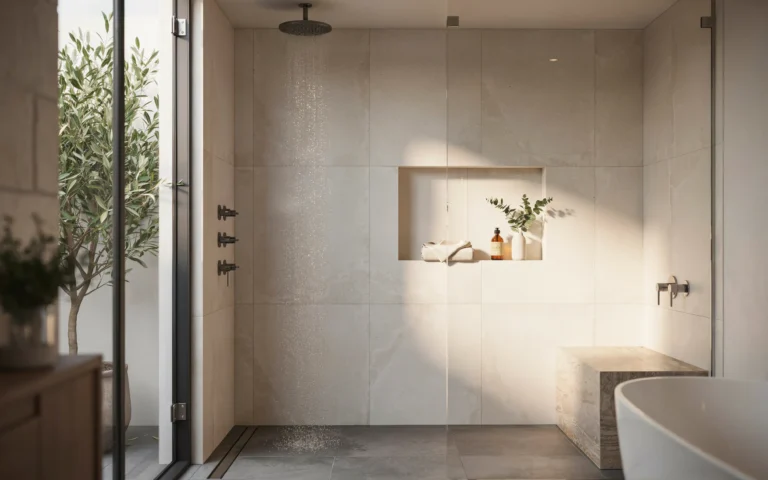
Turn unused wall depth into storage that looks like part of the architecture. A recessed tile niche creates a dedicated place for shampoo, conditioner, soap, and other shower essentials without adding bulky racks or hanging organizers. Matching the niche interior to the surrounding tile gives the installation a seamless appearance, while a contrasting stone or porcelain shelf can create a subtle focal point. I’ve noticed that built-in niches often make showers feel cleaner because bottles have a defined home instead of collecting along the floor or around the tub.
Plan the niche height and shelf spacing around the products you actually use. Taller bottles need more vertical clearance, while a smaller lower section can hold soap or razors. Waterproofing is especially important because the recessed area interrupts the shower wall, so proper installation should be completed before the tile is applied. A slight shelf slope can help water drain instead of pooling. This practical feature keeps necessities within reach while maintaining clean lines. The result is a shower that feels more spacious, organized, and custom-designed without sacrificing useful storage capacity.
Wooden Slat Shelving

- Warm wood balances cool bathroom materials beautifully.
- Vertical slats add architectural texture to plain walls.
- Open shelves make towels and essentials easy to access.
- Baskets can hide smaller items and reduce visual clutter.
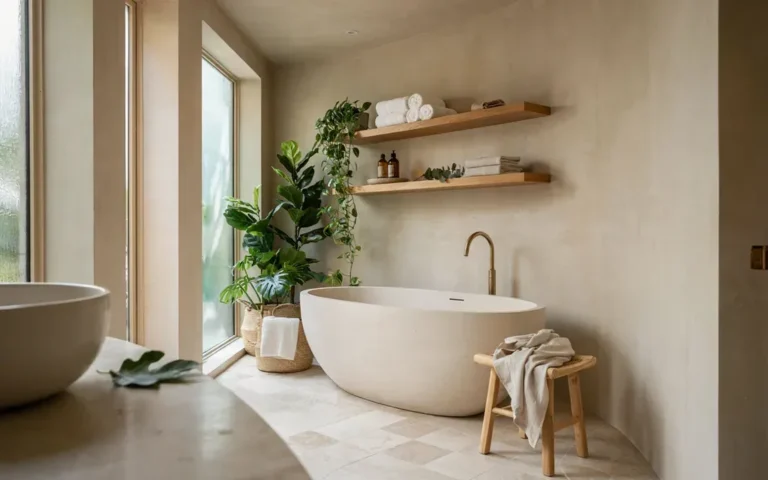
Warm wood can completely change the feeling of a practical bathroom wall. Wooden slat shelving combines open storage with architectural texture, making it useful for towels, baskets, toiletries, and decorative accents. Natural oak, walnut, or moisture-resistant wood-look materials can introduce warmth against tile, stone, or painted surfaces. The vertical slats create visual rhythm and can make the wall appear taller. In my experience, this style works especially well when the bathroom contains several hard surfaces because the wood adds a softer, more organic element without making the space feel traditional.
Keep the shelves relatively shallow so they do not interfere with movement, particularly beside a narrow vanity or toilet. Use woven baskets for smaller items that might otherwise make the display look messy, then reserve open areas for folded towels and a few decorative pieces. If using natural wood in a humid room, select an appropriate finish and follow the manufacturer’s maintenance recommendations. Combining practical storage with warm texture makes the wall more functional while giving the bathroom a relaxed modern character that feels carefully considered rather than overly styled.
Corner Ladder Shelves

- Makes an awkward corner useful without heavy construction.
- Leaning shelves provide several levels of accessible storage.
- Open sides keep the bathroom feeling airy.
- Baskets help conceal smaller everyday essentials.
An unused corner can become valuable storage with surprisingly little effort. A ladder-style shelf leans vertically against the wall, creating several open levels for towels, toiletries, baskets, and decorative pieces. Its narrow footprint makes it useful beside a bathtub, vanity, or even a toilet where wider furniture would interrupt movement. Choose warm wood for an organic look, black metal for a sharper modern feel, or a combination of both. In my experience, ladder shelves are particularly helpful when you need extra storage without committing to permanent wall installation.
Keep heavier items on the lowest shelf to improve stability, especially with a freestanding design. Use baskets for backup toiletries and cleaning supplies, while keeping frequently used towels or skincare products within easy reach. Leave some shelf levels partially open so the arrangement does not become visually crowded. If the bathroom is humid, choose moisture-resistant materials and allow enough airflow around stored textiles. This flexible storage solution can transform an overlooked corner into a useful feature while keeping the overall room open, organized, and visually balanced.
Backlit Floating Shelves

- Creates soft ambient lighting without a bulky fixture.
- Floating construction gives the wall a lighter appearance.
- Backlighting highlights stone, tile, and decorative objects.
- Useful beside a vanity for nighttime essentials.
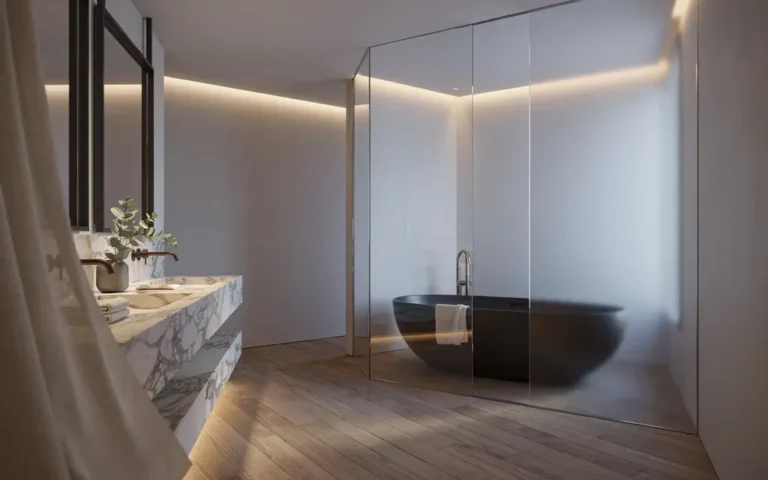
Storage becomes much more atmospheric when soft light is built directly into the shelves. Backlit floating shelves combine concealed LED illumination with practical display space, creating a gentle glow behind towels, bottles, artwork, or small decorative objects. Choose warm white lighting to keep the bathroom inviting rather than clinical. Stone, wood, or painted shelves can all work, depending on the surrounding finishes. I’ve noticed that indirect lighting is especially effective in bathrooms because it provides enough visual guidance at night without creating the harsh brightness of a full overhead fixture.
Install the lighting so the LED source remains hidden from normal viewing angles. A shallow recessed channel or purpose-designed shelf system can create a cleaner result than exposed light strips. Keep the displayed items simple because the glow itself becomes part of the visual feature. Place the shelves near the vanity, bathtub, or entrance where the light can serve a practical purpose. This approach adds both storage and atmosphere, helping the bathroom feel more luxurious while maintaining the clean, floating appearance that works well in modern interiors.
Slim Metal Rail Shelves

- Adds storage without making walls feel bulky.
- Metal rails help prevent bottles from slipping forward.
- Slim proportions suit narrow bathroom walls.
- Black framing creates a crisp modern contrast.
For a clean modern look, sometimes the thinnest storage solution works best. Slim metal rail shelves combine a narrow shelf surface with a raised front edge that keeps bottles, towels, and accessories secure. Matte black rails create strong contrast against white or light-colored walls, while brass or chrome can coordinate with existing fixtures. Their lightweight profile is particularly useful above a toilet, beside a vanity, or on a narrow wall where deeper cabinetry would feel intrusive. In my experience, rail-style shelving gives small bathrooms storage without sacrificing the visual openness that makes them comfortable.
Keep the shelf depth appropriate for the items you plan to store, and use the raised rail to secure bottles rather than treating it as decoration alone. Group similar products together and leave some empty space between sections so the arrangement stays neat. Metal should have a suitable finish for humid environments, especially near showers. Add one woven container or folded towel to soften the harder material. This setup creates a practical balance between structure and openness, giving the bathroom an organized appearance while adding a crisp architectural detail to otherwise plain wall space.
Marble Wall Ledges

- Adds refined storage without bulky cabinetry.
- Marble introduces subtle luxury and visual texture.
- Narrow ledges work well above vanities or toilets.
- Coordinating stone can create a seamless finish.
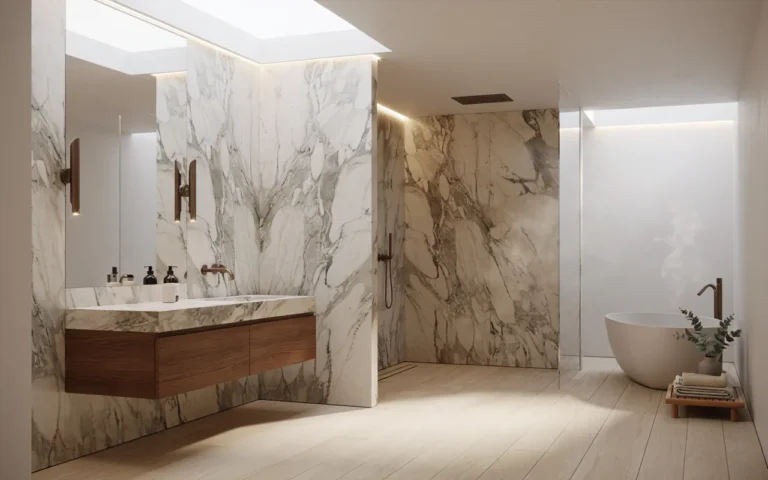
A slim marble ledge can make everyday bathroom storage feel beautifully intentional. Instead of installing deep shelves, use narrow stone surfaces to hold hand towels, perfume bottles, skincare, candles, or small decorative pieces. White marble with delicate veining creates a sophisticated look, while beige or darker stone can add more contrast. Matching the ledge with the countertop helps connect different parts of the room. In my experience, shallow ledges are especially useful when you want storage but need to preserve walking space. They provide just enough surface area without making the wall feel crowded.
Choose a depth that safely accommodates the items you plan to display, and round or soften exposed edges when appropriate for the location. If real marble is outside the budget, porcelain slabs and engineered surfaces can provide a similar appearance with different maintenance requirements. Keep the arrangement edited to a few useful objects rather than filling every inch. A folded towel, small tray, and one decorative piece can be enough. This approach adds practical surface space while giving the bathroom a tailored, architectural appearance that feels more permanent than ordinary floating shelves.
Mirrored Cabinet Shelves

- Combines storage with a useful everyday mirror.
- Adjustable shelves accommodate bottles of different heights.
- Keeps personal products hidden from open view.
- Integrated lighting improves the vanity area.
The best storage sometimes hides behind something you already use every day. A mirrored cabinet with adjustable interior shelves combines reflection, organization, and concealed storage in one compact feature. It can hold skincare, medicines, grooming products, and other small essentials while keeping the vanity countertop clear. Choose a recessed model for the most seamless appearance or a surface-mounted version when wall depth is limited. I’ve noticed that mirrored storage works particularly well in busy bathrooms because it removes visual clutter without sacrificing easy access to frequently used products.
Arrange taller bottles toward the lower or deeper sections and use smaller shelves for compact containers. Adjustable shelving is valuable because bathroom products change in size over time. Make sure the cabinet is suitable for the humid environment and that electrical connections for integrated lighting are installed safely by a qualified professional when required. Keep the exterior mirror simple so it blends naturally with the vanity area. This multifunctional solution makes a small bathroom work harder, creating a cleaner countertop and more organized routine while maintaining the bright, streamlined appearance of a modern space.
Stone Block Shelves

- Adds substantial texture without installing full cabinetry.
- Natural stone brings warmth and permanence.
- Thick edges create a strong architectural detail.
- Works well with minimalist bathroom styling.
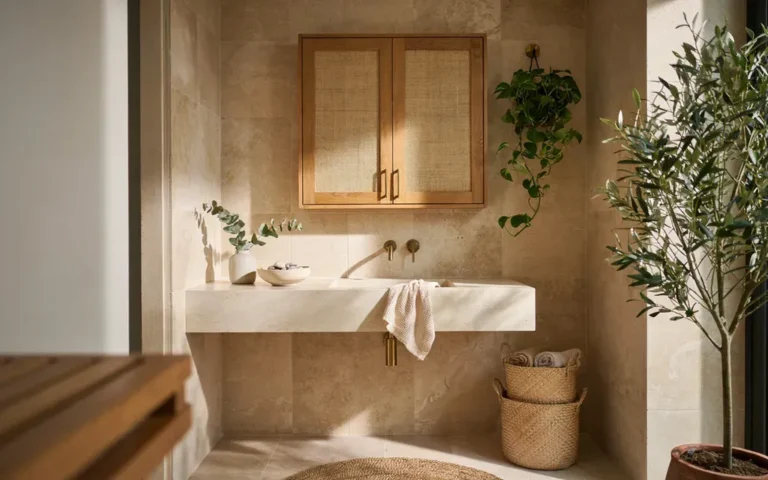
Give a simple bathroom wall more architectural presence with thick stone block shelves. Unlike thin floating shelves, substantial stone slabs create a grounded visual feature that can hold towels, baskets, toiletries, and decorative objects. Limestone, travertine, quartzite, or stone-look porcelain can introduce natural texture while connecting beautifully with counters and flooring. In my experience, thicker shelving works best when the rest of the bathroom remains visually restrained. The shelves become a deliberate feature instead of competing with patterned tile, colorful accessories, or overly detailed fixtures.
Use two or three shelves rather than filling an entire wall, especially in a compact bathroom. Keep the spacing generous enough for towels and taller containers, then use baskets to organize smaller products. Because stone can be heavy, proper mounting and wall support are essential before installation. Consider the material’s moisture resistance and maintenance requirements as well. The finished arrangement can make storage feel like part of the room’s architecture rather than an afterthought. It adds useful surface area, natural character, and a sophisticated modern quality without requiring a large storage cabinet.
Pegboard Storage Wall

- Lets you rearrange storage as your needs change.
- Hooks create useful vertical space for towels.
- Small shelves hold everyday bathroom essentials.
- Works especially well in compact utility-style bathrooms.
Flexible storage can make a bathroom much easier to organize. A moisture-resistant pegboard wall creates a customizable system where shelves, hooks, baskets, and small containers can be moved whenever your routine changes. This makes it useful for towels, grooming tools, skincare, and frequently used accessories. Choose a neutral board that blends with the wall, or use natural wood tones for added warmth. In my experience, adjustable storage is particularly helpful in bathrooms shared by several people because each person can have a designated section without needing a larger cabinet.
Install the board securely and choose materials specifically suitable for humid environments. Keep heavier baskets lower and use upper sections for lightweight accessories or decorative items. Group similar products together so the flexible system still looks visually organized. You can also leave a few sections empty, giving you room to add storage later. This setup provides the convenience of customization without permanent built-ins. As needs change, the arrangement can change with them, helping the bathroom remain practical, tidy, and visually balanced without requiring a complete storage redesign.
Curved Wall Shelves

- Rounded edges soften a bathroom filled with hard surfaces.
- Creates a gentle visual contrast against rectangular tiles.
- Compact curves work beautifully above small vanities.
- Open storage keeps everyday items within easy reach.
Soft curves can instantly change the character of a modern bathroom. Rounded wall shelves introduce a gentler shape against rectangular mirrors, tiles, vanities, and fixtures while providing practical space for toiletries and decorative accents. Choose wood, stone, or moisture-resistant composite materials depending on the room’s finish. A pair of curved shelves above a vanity can create a balanced display, while one larger rounded shelf can become a subtle focal point. I’ve noticed that curved details help contemporary bathrooms feel less rigid without making them look overly decorative or traditional.
Keep the shelves shallow enough to preserve comfortable movement around the vanity and avoid placing frequently used products too close to exposed edges. Repeat the curved shape through an arched mirror, rounded container, or softly shaped lighting fixture for visual continuity. Use only a few objects on each shelf so the silhouette remains visible. This approach adds both storage and architectural softness, making the bathroom feel more thoughtfully designed. The rounded profile is especially effective when you want a modern update that feels distinctive without relying on bold colors or complicated patterns.
Under-Sink Side Shelves

- Uses overlooked space beside or beneath the vanity.
- Keeps towels and daily essentials easily accessible.
- Open sides make the vanity feel less bulky.
- Baskets can conceal smaller bathroom supplies.
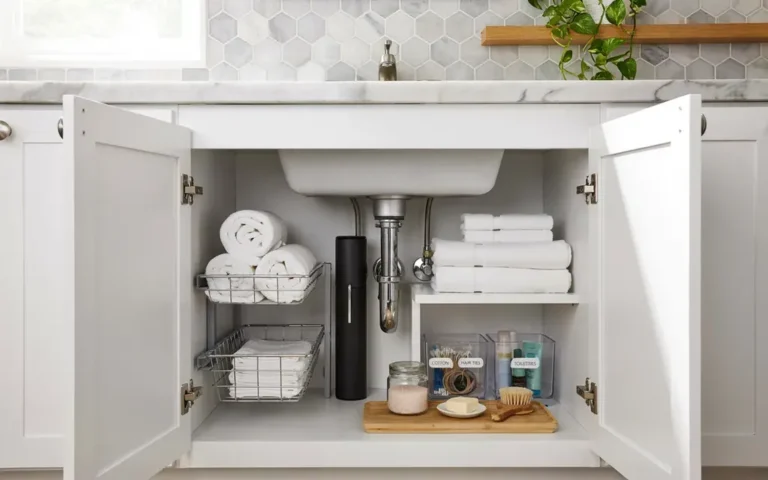
The space around a vanity can offer more storage than it first appears. Open side shelves tucked beneath or beside a floating vanity create useful room for towels, baskets, toilet paper, and everyday essentials without adding another cabinet. This solution works particularly well when the vanity has an open underside or a slightly wider footprint than the sink itself. Natural oak can add warmth, while white or stone finishes create a seamless appearance. In my experience, using these overlooked areas helps small bathrooms feel more organized without making the main walls visually busy.
Keep frequently used items on the easiest-to-reach shelf and place backup supplies inside baskets or containers. Make sure the shelf does not interfere with plumbing, cleaning access, or comfortable movement around the vanity. If towels are stored openly, choose materials that tolerate bathroom humidity and allow adequate airflow. A small plant or ceramic container can add a decorative touch, but practical storage should remain the priority. This arrangement turns unused vanity space into functional organization, helping clear countertops and creating a cleaner, more efficient bathroom layout without adding unnecessary furniture.
Hanging Basket Shelves

- Adds lightweight storage without bulky cabinetry.
- Woven textures soften hard bathroom finishes.
- Hanging baskets are useful for towels and toiletries.
- Vertical placement saves valuable floor and counter space.
Turn an empty wall into practical storage with hanging basket shelves. Woven baskets suspended from a sturdy rail can hold towels, toilet paper, skincare products, or backup supplies while adding natural texture to the bathroom. This arrangement is especially useful when traditional shelves feel too rigid or when you want storage that looks softer and more relaxed. Choose baskets with consistent shapes and neutral tones to maintain a polished appearance. I’ve noticed that woven storage works particularly well with modern bathrooms because it balances smooth tile, glass, and stone surfaces with warmer tactile materials.
Position heavier baskets lower and lighter items higher to keep the arrangement visually balanced and easy to access. Use moisture-resistant materials where possible, and avoid storing damp towels inside enclosed baskets unless they can dry properly. A combination of folded textiles and small containers can keep the display organized without making it look overly decorative. This setup provides vertical storage while adding character to a plain wall. It is an easy way to make everyday essentials accessible, especially in bathrooms where floor space is limited and conventional storage furniture would feel too large.
Double-Tier Glass Ledges

- Two levels create more storage without increasing shelf depth.
- Clear glass keeps the wall visually open.
- Separate tiers make products easier to organize.
- Metallic brackets can complement existing bathroom fixtures.
Two slim glass ledges can provide surprisingly useful storage in a small bathroom. Stacking narrow shelves vertically gives you more room for toiletries, towels, candles, and decorative accents without making the wall feel heavy. Clear glass is particularly effective because it allows the background tile or paint to remain visible. Use brushed brass, chrome, or matte black brackets to connect the shelves with the room’s hardware. In my experience, double-tier arrangements work best when each level has a clear purpose, such as everyday products below and decorative or backup items above.
Keep enough vertical clearance between the ledges for the tallest items you plan to store. Tempered glass is a practical choice for bathroom applications, but the mounting hardware must be securely installed into suitable wall support. Avoid overcrowding both levels because transparency does not eliminate visual clutter. Instead, group products in small trays or containers and leave open space around them. This creates a cleaner display while maximizing storage. The result is a lightweight, modern solution that adds function without visually shrinking the bathroom or covering up attractive wall finishes.
Built-In Toilet Shelving

- Uses the wall around the toilet for storage.
- Recessed shelves keep supplies organized and accessible.
- Built-in design creates a polished architectural finish.
- Closed sections can hide less attractive bathroom essentials.
The wall around the toilet can become valuable storage instead of wasted space. Built-in shelving around or above a concealed toilet creates dedicated areas for towels, toilet paper, cleaning supplies, and decorative objects. Recessed niches keep the storage visually integrated, while closed cabinets can hide items that you would rather keep out of sight. Choose finishes that coordinate with the vanity or wall tile for a cohesive appearance. I’ve seen this approach work especially well in compact bathrooms because it uses vertical wall space while keeping the floor clear for easier movement and cleaning.
Plan the shelves around the plumbing access and the height of the toilet before construction begins. Keep frequently used supplies within comfortable reach and place backup items higher where they are less visible. Open niches can be illuminated with warm LED lighting to add depth, while closed doors maintain a cleaner appearance. Avoid making the storage too deep, as excessive depth can make the toilet area feel enclosed. Done thoughtfully, this arrangement transforms an overlooked wall into useful organization while giving the bathroom a custom-built quality that feels intentional and space-efficient.
Towel Rail Shelves

- Combines towel hanging and shelf space in one feature.
- Keeps fresh towels close to the vanity.
- Saves wall space in compact bathrooms.
- Wood adds warmth against smooth tile surfaces.
Make one wall feature work twice as hard with a shelf that includes an integrated towel rail. The upper surface can hold skincare, candles, or decorative containers, while the lower rail keeps hand towels ready beside the vanity. This combination is especially useful when wall space is limited and separate storage fixtures would look crowded. Choose warm wood for a softer appearance or metal for a sharper contemporary finish. I’ve noticed that combining functions often makes small bathrooms feel more organized because fewer individual fixtures compete for attention while everything remains within easy reach.
Mount the rail at a comfortable height so towels can hang freely without touching the floor or nearby surfaces. Keep the shelf shallow enough to avoid interfering with movement around the vanity. A tray can group small bottles together, while the rail provides a dedicated location for frequently used towels. Choose finishes that resist bathroom humidity and coordinate with existing hardware. This practical combination gives you both display and hanging space in one compact unit. The result is a cleaner vanity area with better organization and a polished modern detail that feels purposeful rather than crowded.
Rotating Corner Shelf

- Makes deep corners easier to access.
- Rotating shelves bring hidden items forward.
- Vertical construction uses minimal floor space.
- Useful for toiletries and backup bathroom supplies.
A difficult corner can become surprisingly practical with a rotating storage tower. This vertical solution uses stacked shelves that turn or pivot, allowing you to reach items that might otherwise disappear into a deep corner. It can hold toiletries, towels, cleaning products, or backup supplies while occupying relatively little floor space. Choose a slim profile and a finish that blends with the bathroom rather than competing with larger fixtures. In my experience, rotating storage is especially useful when conventional corner shelves create awkwardly inaccessible spaces where products are easily forgotten.
Organize the shelves according to frequency of use, keeping daily essentials on the easiest-to-reach levels and backups higher or farther back. Check the rotation clearance carefully before installation so the unit can move freely without hitting the vanity, toilet, or bathtub. Moisture-resistant materials are important in bathrooms, particularly near showers. Keep heavier items positioned low to improve stability. This storage approach adds flexibility to an otherwise awkward area while keeping supplies visible and accessible. It is a smart option for bathrooms that need more organization but cannot accommodate wide cabinets or bulky freestanding furniture.
Picture Ledge Storage

- Creates shallow storage for small bathroom essentials.
- Doubles as a display area for artwork.
- Works well where deep shelving would feel intrusive.
- Easy-to-change arrangements keep the room flexible.
Small ledges can add useful surface space without taking over the wall. Picture-style shelves are shallow enough for framed art, perfume bottles, skincare, candles, and other lightweight bathroom accessories while keeping the overall profile minimal. Their narrow depth makes them particularly useful above a vanity or on a wall beside the mirror. Choose natural wood for warmth, painted MDF for a seamless appearance, or a slim metal finish for a more industrial touch. I’ve noticed that shallow ledges are easier to style than deep shelves because they naturally encourage you to display fewer, more intentional items.
Keep heavier containers toward the center and avoid placing anything unstable near the front edge. If the shelf is above a sink, choose pieces that can tolerate occasional moisture and avoid creating a display that becomes difficult to clean. You can also rotate artwork and accessories seasonally without changing the shelf itself. This flexible feature adds personality while providing just enough practical surface space for daily essentials. The result is a bathroom wall that feels finished and useful without becoming visually crowded or sacrificing valuable circulation space.
Under-Mirror Shelf

- Adds useful storage without covering the mirror.
- Keeps small daily essentials within easy reach.
- Works especially well above compact vanities.
- A slim profile preserves the clean modern look.
A narrow shelf beneath the mirror can solve a surprisingly common storage problem. Instead of filling the vanity countertop with skincare, soap, or small accessories, use a slim ledge directly below the mirror for the items you reach for every day. Its position keeps everything visible and accessible while leaving most of the countertop clear. In my experience, this placement works especially well in compact bathrooms because it uses an otherwise overlooked strip of wall. Choose a finish that matches the vanity, countertop, or hardware for a cohesive and intentional appearance.
Keep the shelf shallow enough to avoid interfering with the faucet or sink area, and use a small tray to group loose items together. Moisture-resistant materials such as sealed wood, stone, porcelain, or powder-coated metal can provide better long-term performance. Avoid overcrowding the ledge because the mirror already creates visual activity. A few carefully selected essentials are enough to make the feature useful. This simple addition improves everyday organization while maintaining an airy vanity area, giving the bathroom a cleaner appearance without requiring additional cabinetry or major structural changes.
Vertical Towel Shelves

- Uses vertical wall space instead of valuable floor area.
- Keeps towels organized and easy to reach.
- Slim proportions work well in narrow bathrooms.
- Baskets can hide smaller bathroom supplies.
Go upward when floor space is limited. A tall, narrow shelving unit can provide several storage levels while taking up very little room. Use the shelves for folded towels, washcloths, baskets, and backup toiletries while keeping the footprint slim enough for narrow bathroom layouts. Warm oak adds natural texture, while white or matte black finishes create a sharper contemporary appearance. In my experience, vertical storage is one of the easiest ways to increase capacity without making a small bathroom feel crowded. The height also draws the eye upward, making the room feel more spacious.
Keep everyday towels on the most accessible shelves and place backup supplies higher up. Use matching baskets to contain smaller products and maintain a cleaner appearance. Make sure the shelving unit is securely anchored, particularly if it is tall or freestanding. Leave enough clearance around it for comfortable movement and cleaning. This practical arrangement turns unused vertical space into organized storage while adding a decorative feature to the bathroom. It is especially useful when traditional cabinets are too wide or when you want additional storage without sacrificing the room’s open, modern feeling.
Floating Corner Cubes

- Makes an empty corner functional without bulky furniture.
- Staggered cubes create visual interest on plain walls.
- Individual compartments keep small items organized.
- Floating installation preserves visible floor space.
Give an overlooked corner a modern storage upgrade with floating cube shelves. Individual wall-mounted cubes can be arranged vertically, horizontally, or in a staggered pattern to create compartments for towels, toiletries, candles, and small decorative objects. Their geometric shape adds structure while keeping the installation visually lightweight. Choose natural wood for warmth, white for a seamless effect, or a darker finish for contrast. I’ve noticed that cube shelving works particularly well when you want storage to feel decorative rather than purely functional. The separate compartments also make it easier to organize different categories of bathroom essentials.
Plan the arrangement before drilling so the cubes feel balanced within the available wall area. Keep heavier items in lower compartments and reserve higher cubes for lightweight accessories or backup supplies. Avoid filling every opening because empty space helps the geometric design remain visible. Use moisture-resistant materials and secure each cube according to its weight capacity. This setup creates flexible storage without requiring a large cabinet or vanity extension. The finished wall feels more intentional and organized while maintaining enough open space to keep the bathroom bright, uncluttered, and comfortable for everyday use.
Pull-Out Shelf Tower

- Fits narrow gaps that would otherwise remain unused.
- Pull-out access makes deep storage easier to reach.
- Concealed shelves keep clutter hidden from view.
- Useful beside vanities, cabinets, or tall bathroom units.
Even a very narrow gap can become valuable storage with a pull-out shelf tower. This slim cabinet slides outward to reveal several vertical shelves, making it useful for toiletries, cleaning products, towels, or backup supplies. Its narrow footprint allows it to fit beside a vanity, between cabinets, or in another unused gap. Choose a cabinet finish that matches the surrounding furniture so the unit blends into the room. In my experience, pull-out storage is particularly practical because deep narrow spaces are otherwise difficult to access and often become wasted areas.
Organize the tower according to how frequently each item is used, keeping everyday products at comfortable heights and backup supplies toward the upper or lower sections. Check the required clearance before installation so the door and shelves can extend fully without hitting nearby fixtures. Choose moisture-resistant construction for humid bathroom environments and make sure the hardware can support the intended load. This solution turns awkward unused space into organized vertical storage while keeping everything concealed when closed. It offers the convenience of a cabinet with the space efficiency of a narrow shelving system.
Conclusion
A well-organized bathroom does not need oversized cabinets or complicated renovations. The right shelving can create more useful space while making the room feel cleaner, calmer, and more intentional. These bathroom shelf ideas offer flexible solutions for small corners, empty walls, vanity areas, and everyday storage needs. Start with one idea that solves your biggest clutter problem, then build from there with textures, baskets, plants, or simple decorative pieces. Save this post on Pinterest so you can return to your favorite designs later, and share it with someone planning a bathroom refresh. Small changes can create a surprisingly beautiful transformation.