22 Modern Bedroom Curtain Ideas for a Luxury Look

The right curtains can make an ordinary bedroom feel instantly more luxurious.
A beautiful window treatment can change the mood, light, and entire character of your space.
If you’re searching for bedroom curtains ideas that feel modern, elegant, and practical, this collection is designed to inspire your next refresh. From soft linen and sheer white panels to dramatic velvet, warm beige, textured taupe, and sophisticated layered treatments, these ideas show how small changes around the windows can create a noticeable transformation. Curtains can soften hard lines, add warmth, improve privacy, control natural light, and make ceilings appear taller. In my experience, choosing the right fabric, length, and color often makes a bigger difference than adding more furniture or accessories. Explore these looks to find a style that fits your bedroom and feels beautiful every day.
Floor-Length Panels

- Makes the ceiling appear taller and the bedroom feel more spacious.
- Soft ivory or greige fabric creates an instantly polished backdrop.
- Mounting the rod higher than the window adds visual height.
- Generous fabric folds make the treatment look richer and more refined.
Make the windows feel instantly taller with floor-to-ceiling curtains that begin close to the ceiling and fall softly to the floor. This simple treatment draws the eye upward, making an ordinary bedroom feel more spacious and polished. Choose a soft neutral fabric such as ivory, warm beige, or light greige for a calm luxury effect. In my experience, mounting the rod several inches above the window frame creates a surprisingly dramatic difference without changing the room itself. Keep the fabric wide enough to form gentle folds when closed, so the window looks finished rather than flat.
Floor-to-ceiling panels also improve the overall rhythm of a bedroom because their long vertical lines connect the ceiling, walls, and flooring visually. They work especially well behind a low upholstered bed, where the extended fabric balances the furniture proportions. For everyday comfort, select a lined material that filters bright morning light while maintaining softness. A simple matte black, brushed brass, or warm metal curtain rod can add a refined finishing detail. Among bedroom curtains ideas, this approach is especially useful when you want luxury without adding heavy patterns, ornate furniture, or too many decorative accessories.
Layered Sheer Panels

- Combines daytime softness with practical nighttime privacy.
- Sheer white fabric gently filters sunlight without blocking it completely.
- Heavier outer panels add depth, warmth, and better light control.
- Neutral colors keep the layered look elegant instead of visually heavy.
Create a calm hotel-inspired look by layering sheer curtains beneath heavier blackout panels. The combination gives you softness during the day and privacy when you need it at night. Start with a lightweight white or ivory sheer layer, then add solid panels in taupe, sand, charcoal, or muted beige. The contrast between transparent and opaque fabrics adds depth without making the bedroom feel busy. I’ve noticed this setup works particularly well in rooms with large windows because it gives the entire wall a fuller, more intentional appearance while keeping the sleeping area visually serene.
Layered window treatments are also practical because you can control light throughout the day instead of relying on one fabric for every purpose. Keep the sheers closed for diffused daylight, then draw the outer panels when the room needs darkness or privacy. For a luxurious finish, let both layers extend from ceiling height to the floor and use generous fabric widths for elegant folds. Choose textures that complement nearby bedding, rugs, and upholstery rather than matching everything exactly. This approach makes the room feel collected and comfortable, while fabric variation adds the depth often seen in upscale bedrooms.
Soft Linen Drapes

- Brings natural texture into a clean, modern bedroom.
- Oatmeal, flax, cream, and stone shades create a warm neutral palette.
- Relaxed folds soften hard furniture lines and plain walls.
- Linen-look blends can provide a smoother, more practical finish.
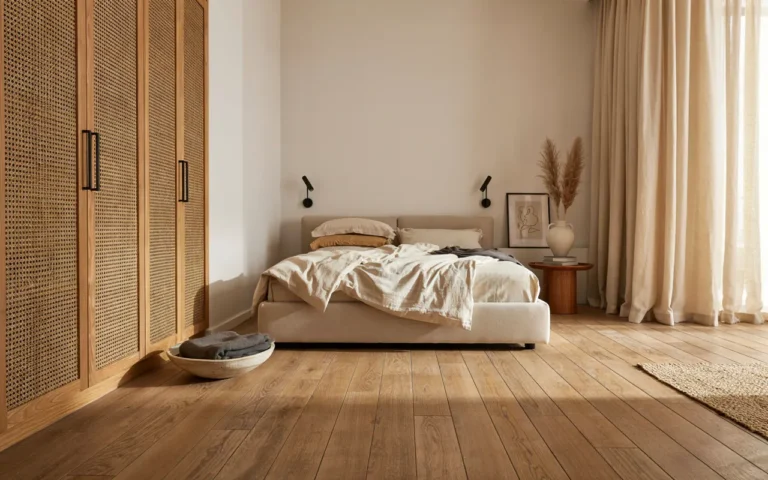
Add quiet sophistication with soft linen curtains in a warm neutral shade. Their slightly relaxed texture brings natural character to the bedroom while keeping the overall look clean and modern. Look for oatmeal, flax, cream, or stone tones that complement wood furniture and upholstered pieces. Linen works beautifully when you want a room to feel refined without looking overly formal. In my experience, its natural weave is especially helpful in minimalist bedrooms because it prevents plain walls and simple furniture from feeling cold. Hang the panels generously so the fabric gathers into relaxed, graceful folds around the window.
Linen panels are a smart choice when you want visual warmth and breathable texture without introducing a strong pattern. During daylight, the weave catches soft sunlight and creates gentle variation across the fabric, giving the room a layered appearance. Pair them with a simple wood or brushed metal rod and keep the hardware understated. For a more polished result, choose lined linen or a linen-look blend that hangs smoothly and provides better light control. This is one of the most versatile bedroom curtains ideas because the neutral texture can easily work with modern, Scandinavian, contemporary, or softly minimalist furniture.
Blackout Velvet Panels

- Adds rich texture and a sophisticated hotel-inspired finish.
- Velvet helps soften sound and block unwanted outside light.
- Deep taupe, charcoal, or mocha works beautifully with neutral bedding.
- Use simple hardware so the luxurious fabric remains the focal point.
For a bedroom that needs both drama and comfort, blackout velvet panels create an instantly richer atmosphere. The dense fabric gives windows a substantial, elegant appearance while helping reduce bright sunlight and outside visual distractions. Choose deep taupe, mocha, charcoal, or muted olive instead of extremely bold colors if you want a modern luxury feel. The soft pile catches light differently throughout the day, creating subtle depth across the wall. I’ve seen this work especially well in bedrooms with simple furniture because the curtains provide enough texture to make the space feel finished without adding excessive decoration.
Velvet also brings a useful sense of warmth, making large windows feel less exposed during cooler months. Pair the panels with an upholstered headboard, layered bedding, and understated metallic accents for a balanced look. Avoid overly ornate rods or decorative tiebacks, since the fabric already provides plenty of visual richness. For better everyday function, choose blackout-lined velvet when sleeping conditions matter. Hang the panels high and wide around the window so they frame the opening rather than covering only the glass. The result feels sophisticated, comfortable, and intentionally designed while remaining practical for everyday bedroom living.
Neutral Textured Panels

- Adds dimension without introducing a strong pattern.
- Warm beige and creamy shades create an easy, sophisticated foundation.
- Woven or subtly ribbed fabric gives plain walls more visual interest.
- Neutral panels can stay stylish as furniture and decor change.
Give a simple bedroom more dimension with neutral curtains that feature subtle woven, ribbed, or slubbed texture. Instead of relying on bold prints, let the fabric itself create visual interest. Shades such as warm beige, mushroom, ivory, and soft taupe blend naturally with modern furniture while still making the windows feel intentionally styled. This approach works especially well when the room already contains several neutral surfaces. The small changes in texture prevent everything from appearing flat. A softly structured panel can make an ordinary window feel like part of the room’s overall design rather than an afterthought.
Textured neutral curtains are also wonderfully flexible because they can adapt as your decorating style evolves. Pair them with natural wood, boucle upholstery, woven rugs, ceramic accessories, or simple metal lighting for a cohesive modern scheme. I’ve noticed that slightly heavier textured fabrics tend to hang more beautifully than very thin materials, particularly when the panels extend from ceiling to floor. Keep the color close to the wall for a seamless effect, or choose a slightly deeper shade for gentle contrast. This balance creates polished bedroom curtains ideas without making the space feel staged, crowded, or overly coordinated.
Ceiling-Mounted Drapes

- Creates an uninterrupted vertical line from ceiling to floor.
- Ideal for rooms where traditional curtain rods feel visually heavy.
- Concealed tracks give the window wall a cleaner architectural finish.
- Full-width drapes can make smaller windows appear more substantial.
Create a seamless, architectural look by mounting the curtains directly from the ceiling. This technique removes the visual gap above the window and allows the fabric to fall in one continuous line toward the floor. It is especially effective in modern bedrooms with tall ceilings, wide windows, or minimalist furniture. Choose soft white, warm ivory, beige, or greige to keep the effect sophisticated and airy. The hidden track also eliminates unnecessary hardware, allowing the curtains themselves to become a clean design element. For smaller bedrooms, this vertical treatment can make the entire room appear taller and more spacious.
Ceiling-mounted drapes can also solve awkward window proportions, especially when the glass begins lower on the wall than you would prefer. Instead of emphasizing the window’s existing dimensions, the fabric creates a larger visual frame around it. For the best result, extend the track beyond both sides of the window so the panels can open completely without covering the glass. In my experience, generous fabric width makes this treatment look much more luxurious because the curtains gather into fuller folds. Pair the clean lines with simple bedding, warm lighting, and minimal accessories for a polished contemporary bedroom.
Double Rod Curtains

- Creates flexible light control without sacrificing a polished appearance.
- Sheers provide daytime privacy while heavier panels add nighttime coverage.
- Two coordinated fabrics make the window treatment feel layered and custom.
- Keep both colors within the same neutral family for a cohesive finish.
A double curtain rod makes a bedroom window more versatile while adding an elegant layered effect. Place lightweight sheer panels on the inner rod and fuller decorative or blackout curtains on the outer rod. During the day, the sheers soften incoming sunlight and provide gentle privacy, while the outer panels can close when you want deeper shade. This setup is especially useful for bedrooms facing busy streets or strong afternoon sun. Choose closely related shades, such as ivory sheers with warm beige panels, so the layers feel intentional rather than mismatched. The result looks refined without becoming overly formal.
Double rods also make it easier to change the mood of the room throughout the day. Keep the sheer layer partially closed for a bright, diffused atmosphere, then pull both layers together when you want a darker, cozier setting. For a luxury finish, install the rods high and extend them beyond the window frame on both sides. Use curtains with enough width to create generous folds when closed. This practical arrangement combines several bedroom curtains ideas into one flexible solution, giving you privacy, light control, texture, and a more substantial appearance around the window without adding complicated decor.
Warm Beige Drapes
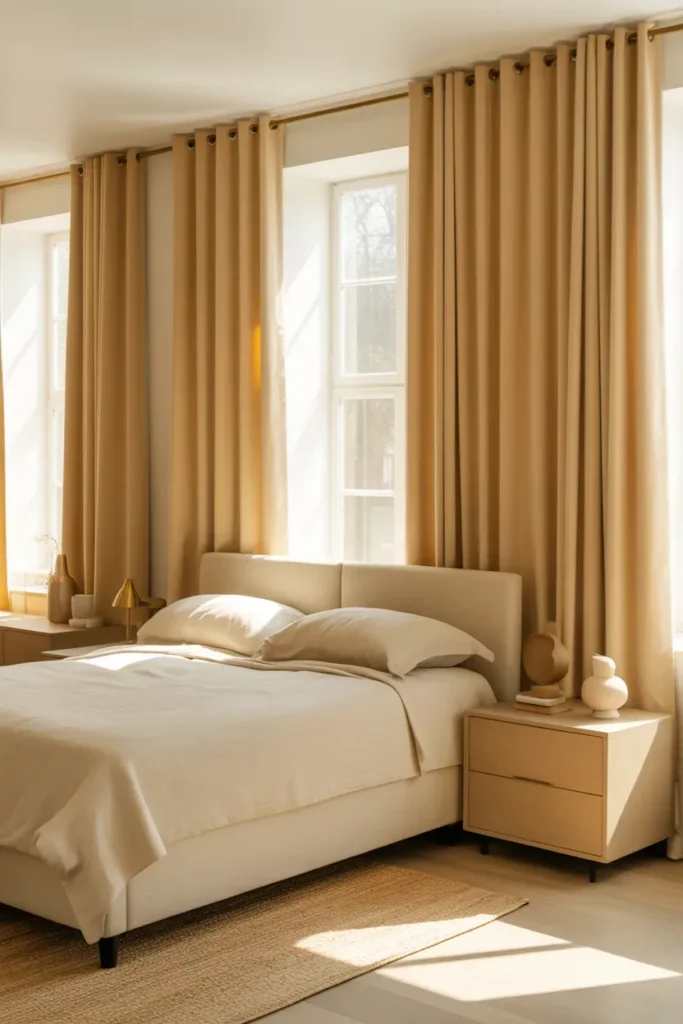
- Warm beige softens a modern room without making it feel dated.
- Works beautifully with cream, ivory, oak, brass, and natural textures.
- A tone-on-tone palette creates calm visual continuity.
- Choose slightly darker panels when the walls are very pale.
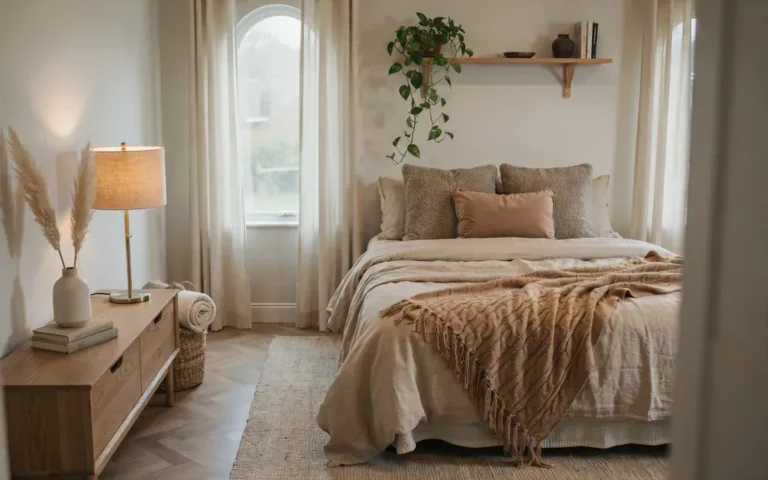
Warm beige drapes can make a modern bedroom feel instantly softer, warmer, and more expensive without requiring dramatic changes. Their neutral tone works beautifully with creamy walls, ivory bedding, light wood, brass details, and natural woven textures. Instead of creating sharp contrast, beige curtains build a gentle tonal layer around the windows. This makes the room feel cohesive and relaxed while still looking polished. If your walls are already white or cream, choose a slightly deeper beige so the fabric remains visible. That subtle difference adds depth without disrupting the calm, sophisticated character of the space.
The beauty of warm beige is its flexibility across changing seasons and decorating preferences. You can pair the same panels with lightweight summer bedding, chunky winter blankets, or different accent pillows without needing to replace the window treatment. I’ve noticed that curtains with a slightly heavier weave often look more tailored and expensive than very thin materials. Hang them close to the ceiling and allow the fabric to just kiss the floor for a clean finish. Among bedroom curtains ideas, this neutral approach is especially dependable when you want an elegant bedroom that feels comfortable rather than overly styled.
Floor-Pooling Curtains
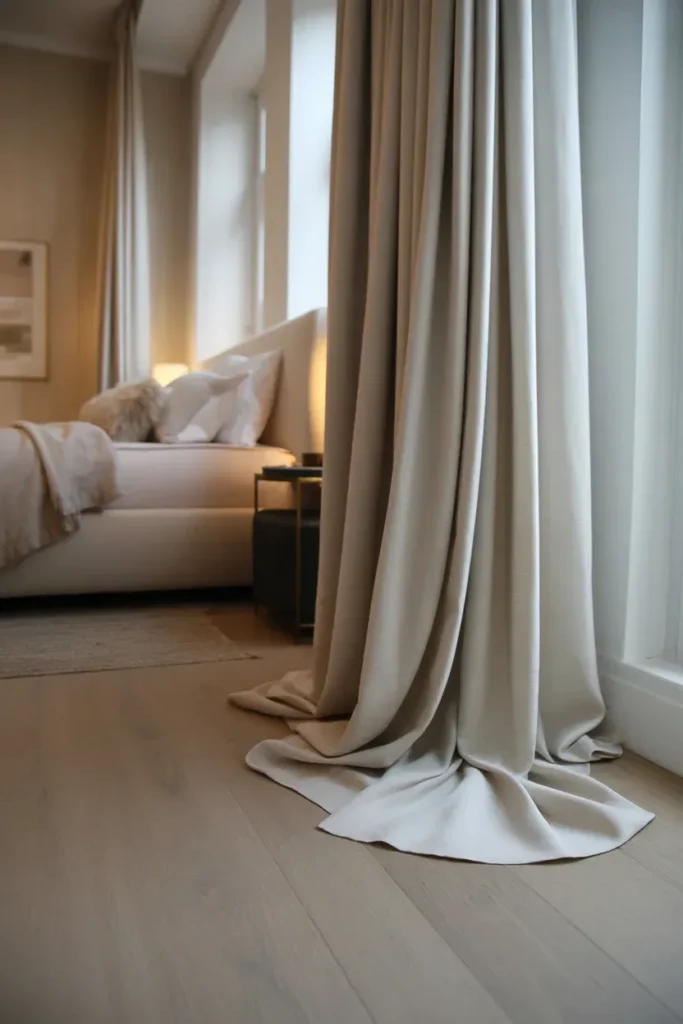
- Creates a relaxed, romantic finish around tall windows.
- Extra fabric produces soft folds and a more luxurious appearance.
- Best suited to rooms where the floor area stays clear and tidy.
- Keep the pooling subtle to avoid a messy or impractical look.
For a softer, more relaxed luxury effect, allow your curtains to extend slightly onto the floor instead of ending exactly at the surface. This styling technique creates gentle fabric pooling that feels plush and decorative, especially with linen, velvet, or heavyweight cotton panels. It works best in bedrooms where the area beneath and around the windows remains uncluttered. Keep the extra length modest rather than allowing a large amount of fabric to gather. A small puddle creates elegance while remaining easier to maintain. Pair the panels with simple furniture so the relaxed fabric remains the main visual detail.
Floor-pooling curtains are more decorative than practical, so consider where you use them before choosing this finish. They can collect dust more easily and may not be ideal near frequently opened doors, pets, or high-traffic areas. For a cleaner alternative, allow just enough fabric to create a soft break at the floor. In my experience, this slight extra length looks especially beautiful in bedrooms with tall ceilings because it emphasizes the height while adding softness. Choose a quiet neutral color and minimal hardware to keep the overall result modern, refined, and visually balanced.
Black Curtain Contrast
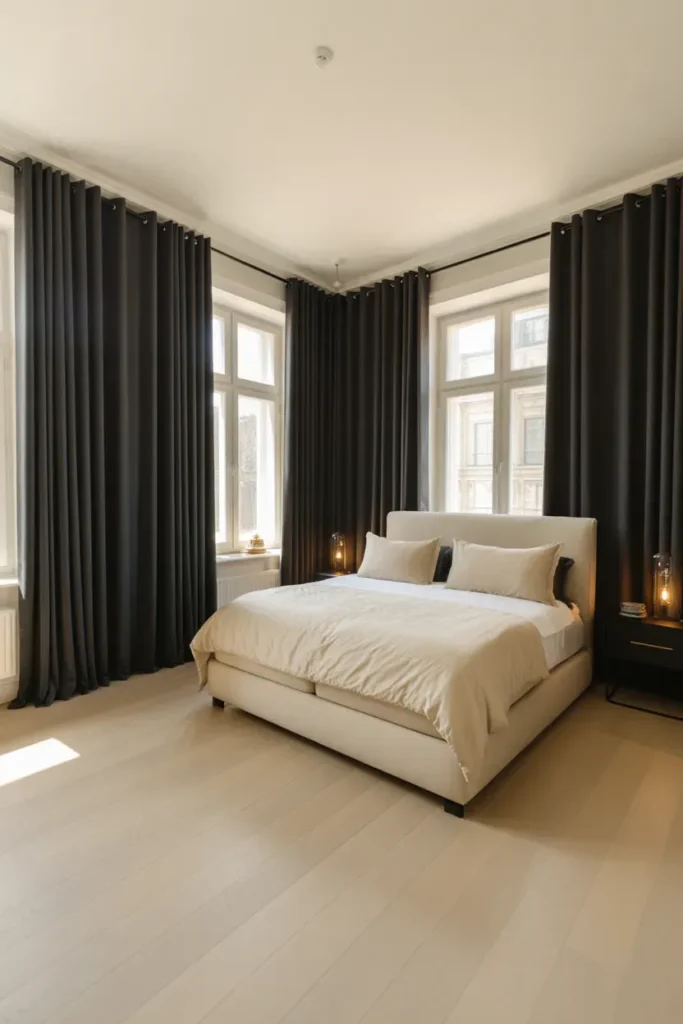
- Creates a bold focal point without changing the furniture.
- Matte black fabric looks more sophisticated than overly glossy materials.
- Repeating black through small accessories keeps the room balanced.
- Use warm neutrals nearby to prevent the space from feeling harsh.
Make a strong statement with matte black curtains against warm white or creamy walls. The deep color immediately frames the window and creates architectural contrast, making the bedroom feel more intentional and sophisticated. This approach works particularly well when the rest of the room uses light upholstery, natural wood, or neutral bedding. Repeating small touches of black through a lamp, picture frame, or bedside accessory helps connect the curtain color to the rest of the space. I’ve noticed that matte fabrics usually feel more refined than shiny black materials, especially in modern bedrooms with minimal decoration.
Black panels can also improve the visual proportions of a large window by creating a strong boundary around the glass. Choose full-length curtains with a smooth or lightly textured finish and hang them high enough to emphasize the ceiling. If the room receives strong daylight, blackout lining can make the dark fabric even more functional. Avoid adding too many additional dark elements, because the curtains should remain the main contrast. Pair them with warm lighting and creamy textiles to soften the effect. The result feels dramatic yet comfortable rather than cold, making this one of the boldest bedroom curtains ideas for contemporary spaces.
Soft Gray Panels

- Soft gray creates contrast while remaining calm and versatile.
- Works beautifully with white, cream, pale wood, and muted metallics.
- Cooler gray suits contemporary rooms with clean architectural lines.
- Choose warm gray when the bedroom has beige or natural wood tones.
Soft gray curtains bring a refined layer of contrast to a modern bedroom without overpowering the space. They are especially useful when white walls and light bedding feel slightly too plain but you still want a peaceful palette. Choose a warm gray for bedrooms with beige upholstery and natural wood, or a cooler gray for spaces featuring white surfaces and silver-toned accents. Full-length panels create clean vertical lines that make the room feel taller. The gentle color also photographs beautifully in natural daylight, giving Pinterest images a polished appearance without relying on dramatic styling.
Gray panels are easy to combine with different textures, which makes them practical for bedrooms that evolve over time. Add boucle bedding, woven rugs, smooth cotton sheets, or a plush upholstered headboard to create contrast without introducing strong colors. That’s why many designers recommend using gray as a flexible foundation when you want a sophisticated neutral scheme. For a more luxurious appearance, select fabric with a subtle weave rather than a completely flat surface. Hang the panels wider than the window so they frame the opening generously and create fuller folds when closed.
Wall-Matched Drapes
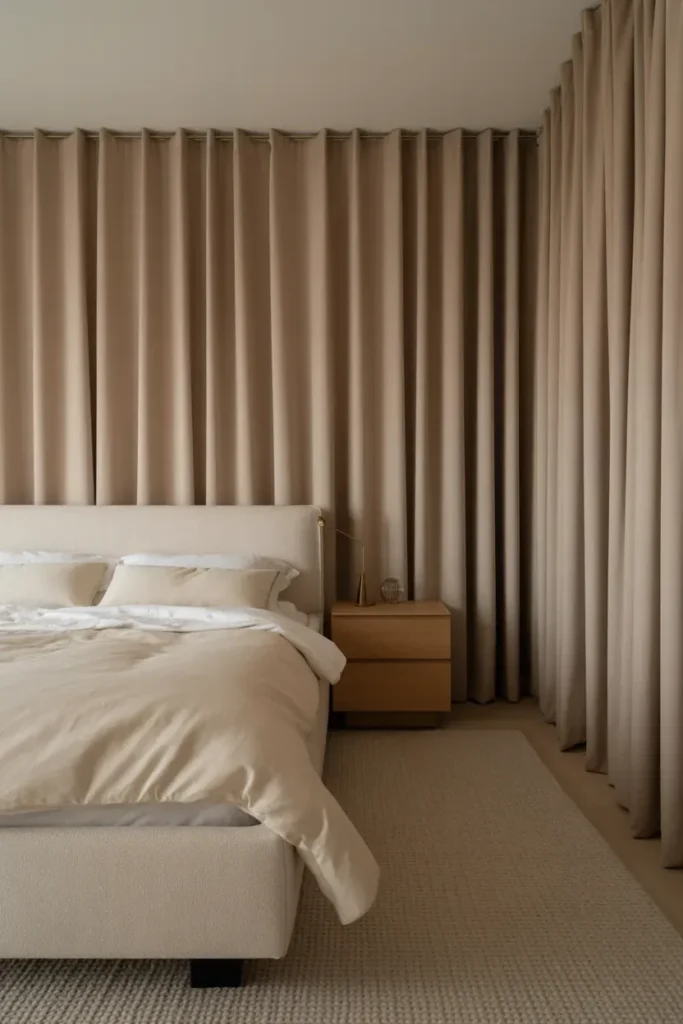
- Matching curtains to the wall creates a seamless, spacious appearance.
- Tonal layering makes small bedrooms feel less visually crowded.
- Greige, beige, cream, and soft gray work especially well.
- Use varied textures to prevent the monochromatic palette from looking flat.
Create a seamless, sophisticated bedroom by choosing curtains that closely match the wall color. Instead of standing out as a separate feature, the panels blend into the architecture and make the entire window wall feel taller and more continuous. This technique works beautifully in smaller bedrooms because fewer strong color breaks can make the space appear calmer and more spacious. Try warm beige curtains with beige walls, soft gray panels with gray walls, or ivory fabric against creamy paint. The subtle tonal relationship creates a quiet luxury effect while allowing furniture, bedding, artwork, or lighting to provide gentle contrast.
Wall-matched drapes are particularly effective when the fabric has enough texture to remain visible. A woven linen, subtle cotton blend, or softly structured fabric can catch natural light and create depth without introducing another color. In my experience, the best results come from varying textures rather than trying to make every surface identical. Keep the hardware discreet, preferably with a slim rod or concealed track, so the fabric maintains its continuous appearance. This approach gives you elegant bedroom curtains ideas that feel custom-built into the room while keeping the overall design simple, modern, and easy to maintain.
Ivory Ripplefold Curtains

- Creates clean, evenly spaced folds for a tailored appearance.
- Ivory fabric keeps the bedroom bright and visually spacious.
- Works especially well with minimalist and contemporary furniture.
- A ceiling track gives the treatment an especially seamless finish.
Give the bedroom a polished architectural feel with ivory ripplefold curtains that create evenly spaced, continuous waves across the window wall. Unlike traditional gathered curtains, this style maintains a consistent fold pattern, making the fabric look neat even when partially open. Ivory is especially effective because it reflects daylight and keeps the room feeling airy. Pair the panels with warm white walls, pale wood, and soft beige bedding for a calm luxury palette. The uniform folds also add texture without introducing a busy pattern, making the window treatment feel sophisticated and deliberately designed.
Ripplefold curtains are particularly useful when you prefer clean lines but still want softness around the windows. A ceiling-mounted track can make the panels appear almost integrated into the architecture, while a wider track allows the fabric to stack neatly beside the glass. Choose a medium-weight material that holds the folds without becoming stiff. I’ve noticed this treatment looks especially refined in rooms with large windows because the repeated waves create a strong horizontal rhythm. Keep surrounding decor simple so the consistent curtain pattern remains noticeable without competing against artwork, bedding, or statement lighting.
Mocha Linen Curtains
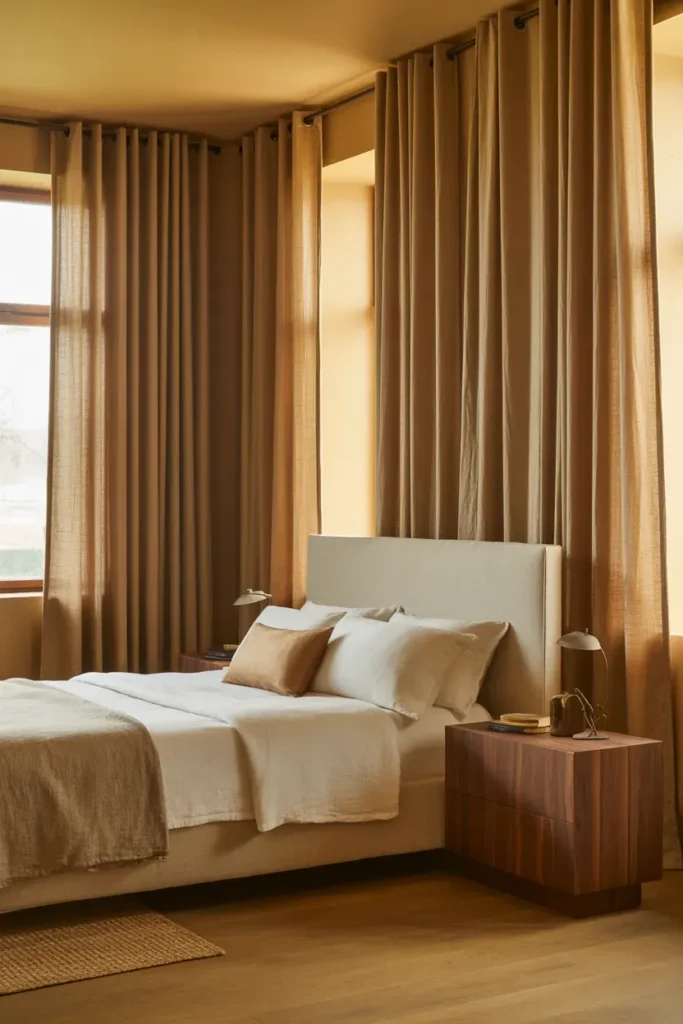
- Adds warmth and depth without relying on bright colors.
- Mocha pairs beautifully with cream, ivory, walnut, and natural wood.
- Linen texture keeps the darker shade feeling relaxed and modern.
- Ideal for bedrooms that need more visual warmth around windows.
Bring richer warmth into a neutral bedroom with mocha linen curtains. This earthy brown shade adds depth while remaining softer than black or charcoal, making it an excellent choice for contemporary spaces that feel slightly too pale. Pair mocha panels with cream walls, ivory bedding, walnut furniture, and natural wood flooring for a layered palette inspired by warm earth tones. The linen texture prevents the darker color from appearing heavy. Instead, the fabric catches daylight softly and creates natural variation across the window area, giving the bedroom a comfortable yet elevated appearance.
Mocha curtains can also help balance bedrooms with very light furniture by introducing a grounding element around the windows. Choose a relaxed linen weave for a casual modern look, or select a heavier linen blend for more structured folds. Keep the curtain hardware understated in bronze, black, or brushed brass, depending on the existing fixtures. For a cohesive room, repeat the mocha tone in a small cushion, throw, or decorative object rather than matching every accessory. This creates a thoughtfully layered design while keeping the window treatment visually important. The result feels warm, mature, and effortlessly luxurious.
Arched Window Framing

- Frames unusual window shapes while preserving their architectural character.
- Full-length panels can visually connect an arch to the floor.
- Neutral fabric keeps the architectural feature as the focal point.
- Mount hardware outside the arch when you want the window to feel taller.
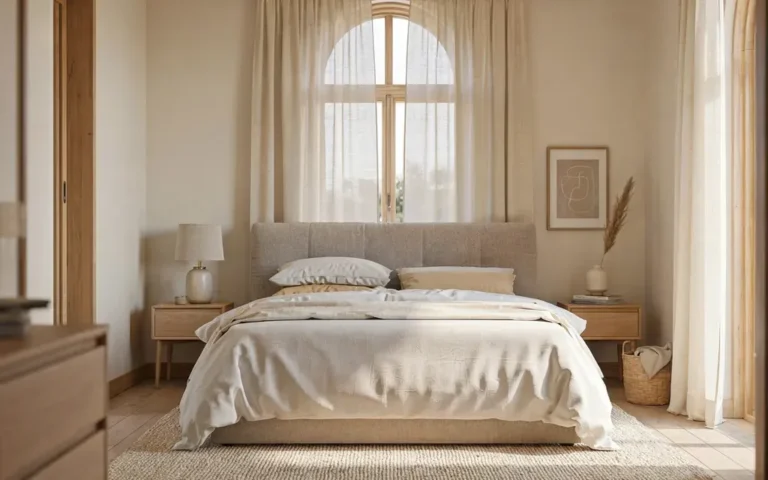
Highlight an arched window by framing it with long, full-height curtains that extend beyond the shape of the glass. Rather than trying to cover the arch exactly, position the panels outside the window so the curved architecture remains visible when the curtains are open. This creates a beautiful contrast between the soft vertical fabric and the graceful window shape. Cream, ivory, or warm beige works particularly well because these shades keep attention on the architecture. The treatment can make an unusual window feel more intentional while adding softness to the surrounding bedroom.
This approach also gives you practical flexibility because the curtains can provide privacy and light control without hiding the architectural feature completely. Extend the curtain rod or track beyond both sides of the window so the panels can stack away from the glass. For rooms with high ceilings, mount the treatment close to the ceiling to emphasize vertical height. I’ve seen this work especially well with upholstered beds and curved furniture because the repeated soft lines create visual harmony. Keep the rest of the decor restrained so the arched window and elegant fabric remain the room’s defining elements.
Wide Window Panels

- Makes a wide window feel more balanced and intentionally framed.
- Extra fabric creates fuller folds and a richer appearance.
- Extending the rod beyond the glass improves both style and function.
- Soft neutrals keep a large curtain wall from feeling overwhelming.
Give a broad bedroom window a more substantial, designer-inspired finish with extra-wide curtain panels. Instead of stopping the rod at the edges of the glass, extend it several inches beyond both sides so the fabric can frame the entire opening. This makes the window feel larger while allowing more daylight inside when the curtains are open. Choose a soft taupe, warm beige, ivory, or muted gray depending on your existing palette. Fuller panels also create graceful folds that add texture and make a large wall feel intentionally decorated rather than visually empty.
Wide window treatments are especially helpful in bedrooms where oversized glass can dominate the furniture arrangement. When the curtains are opened, they stack neatly beside the window instead of blocking valuable light. When closed, the broad fabric creates a calm backdrop that can visually anchor the bed and surrounding furniture. In my experience, using enough fabric is the key to making this treatment look luxurious; narrow panels often appear skimpy across large windows. Pair the generous width with ceiling-height installation and simple hardware for a streamlined finish that feels custom without becoming overly decorative.
Olive Green Drapes

- Adds natural color while keeping the bedroom sophisticated.
- Muted olive works beautifully with cream, walnut, beige, and brass.
- Earthy green creates a calming connection to natural materials.
- Choose dusty or muted tones instead of highly saturated green.
Introduce a refined touch of color with muted olive green curtains. This earthy shade brings the feeling of nature indoors while remaining sophisticated enough for a modern luxury bedroom. Pair it with warm ivory walls, cream upholstery, walnut furniture, and beige bedding to create a balanced palette. Olive works particularly well when the room already contains natural materials because the color connects visually with wood, woven textures, and greenery. Choose a dusty or gray-based olive rather than a bright green for a calmer effect that feels timeless instead of trendy.
Olive drapes can also become the room’s subtle color anchor without requiring matching furniture or accessories. Repeat only small hints of the shade through artwork, a cushion, or a plant pot rather than covering the entire room in green. Select a textured cotton, linen, or linen-blend fabric for a relaxed modern appearance. For stronger light control, consider a lined version that maintains the rich color while improving privacy. Among bedroom curtains ideas, this option is especially useful when you want something more expressive than beige but still want the bedroom to feel peaceful, natural, and easy to live with.
Minimal Pinch Pleats
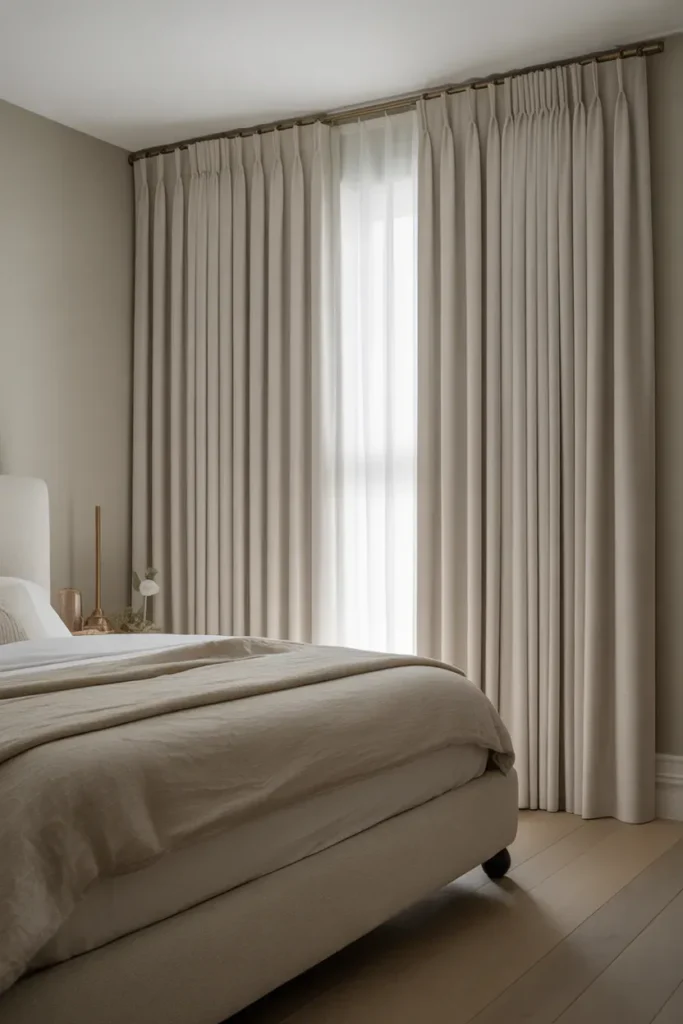
- Creates structured folds without making the room look overly formal.
- Works well with smooth cotton, linen blends, and heavier fabrics.
- A simple rod keeps the pleated treatment contemporary.
- Consistent spacing gives the window a polished custom-made appearance.
Add tailored structure to the bedroom with minimal pinch-pleat curtains. The evenly gathered fabric creates clean vertical folds that look polished without feeling overly traditional. Choose ivory, soft beige, warm gray, or another neutral shade that complements the walls and bedding. This style works particularly well in modern bedrooms because the pleats provide visual order while the full-length fabric keeps the room soft. A simple curtain rod in brushed brass, matte black, or another existing hardware finish can complete the look without competing with the carefully arranged folds.
Pinch pleats are also practical when you want curtains that maintain a consistent shape instead of appearing loose or uneven. Use a medium-to-heavy fabric that holds its structure and install the panels high enough to emphasize the room’s vertical proportions. Keep the curtain width generous so the pleats remain full when the panels are closed. I’ve noticed that this treatment looks especially elegant when repeated lines appear elsewhere in the room through vertical wall panels, bedside lighting, or upholstered details. The result is a refined window treatment that feels intentional, balanced, and comfortably modern.
Sheer White Curtains

- Keeps the bedroom bright while softly filtering harsh sunlight.
- White sheers make windows feel larger and more open.
- Lightweight fabric adds softness without visual heaviness.
- Pair with blackout panels when nighttime privacy is important.
Create an airy, light-filled bedroom with floor-to-ceiling sheer white curtains that gently filter daylight. Their translucent fabric softens direct sunlight while keeping the room bright, making them especially useful for bedrooms with smaller windows or limited natural light. Choose pure white for a crisp contemporary appearance or warm ivory for a softer luxury feel. The lightweight material also creates graceful movement and delicate texture around the window. Instead of making the room feel decorated, sheers almost disappear into the architecture, allowing the bed, artwork, and furniture to remain the primary visual focus.
Sheer panels work beautifully on their own when privacy needs are modest, but they can also become the inner layer of a more functional treatment. Add heavier curtains behind them when you need darkness at night or greater privacy. Mount the panels close to the ceiling and extend the rod beyond the window for a taller, wider appearance. In my experience, using extra fabric width makes sheer curtains look much more elegant because the folds catch light naturally. Keep surrounding colors soft and neutral to preserve the bright, peaceful atmosphere that makes this treatment so appealing.
Taupe Textured Drapes

- Adds warmth without the heaviness of darker curtain colors.
- Taupe bridges beige and gray for a versatile modern palette.
- Textured fabric creates depth against smooth walls and furniture.
- Complements wood, cream upholstery, brass, bronze, and natural fibers.
Add understated richness with taupe curtains featuring a subtle woven texture. Taupe sits between beige and gray, making it particularly versatile when a bedroom contains both warm and cool neutrals. The textured surface gives the fabric enough character to stand out against plain walls without introducing a noticeable pattern. Pair it with cream bedding, walnut furniture, pale oak flooring, and warm metallic accents for a sophisticated layered palette. This combination feels polished but approachable, making it easy to create a luxury-inspired bedroom without relying on dramatic colors or ornate furnishings.
Textured taupe panels are also practical because they hide minor wrinkles and visual inconsistencies better than completely smooth fabrics. Choose a medium-weight material that hangs with a controlled drape and install it from ceiling height for stronger vertical impact. If the bedroom receives intense sunlight, consider a lined version to protect the fabric and improve light control. That’s why many designers favor tonal neutrals for long-term flexibility: they remain compatible with changing bedding and accessories. This treatment gives you a refined foundation that can move easily between contemporary, minimalist, transitional, and softly organic bedroom styles.
Curtains Behind Bed

- Turns the bed wall into a soft architectural focal point.
- Creates a layered backdrop when the room lacks architectural detail.
- Full-height fabric adds vertical emphasis behind a low bed.
- Use a sturdy track and keep curtains clear of electrical fixtures.
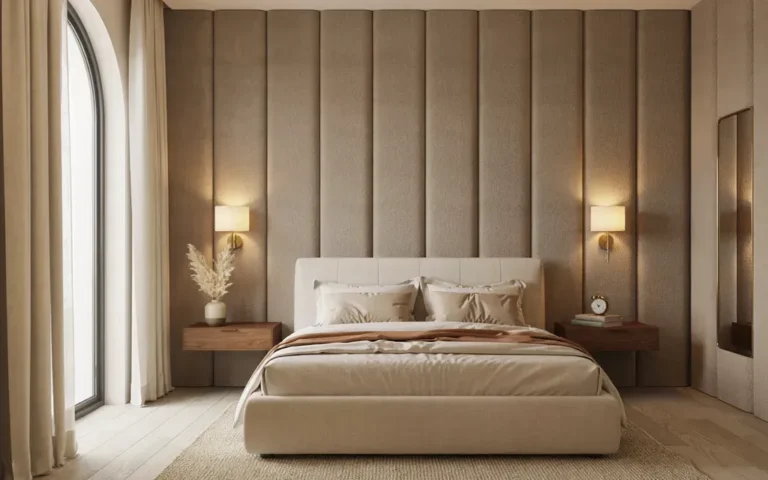
Make the bed feel more luxurious by using full-height curtains as a soft backdrop behind it. This technique works particularly well when the bedroom lacks a dramatic feature wall or architectural detailing. Instead of placing the curtains only over a window, run the fabric across the wall behind the bed to create a calm, upholstered-looking surface. Ivory, warm beige, soft gray, or taupe panels work beautifully with neutral bedding. The continuous fabric adds height, texture, and visual softness while giving the sleeping area a more intentional focal point.
Curtains behind the bed are best used when the wall layout allows enough space for safe installation and easy access to switches or outlets. Keep the fabric slightly behind or beside the headboard rather than trapping it between furniture and wall. A ceiling track can create the cleanest appearance, especially in modern interiors. I’ve seen this work well in bedrooms where painted walls feel too plain because the fabric instantly introduces depth without permanent construction. Add simple pendant lights or slim bedside tables in front of the drapes to create contrast and maintain a balanced, contemporary composition.
Champagne Silk Panels

- Adds subtle sheen without relying on bold colors or patterns.
- Champagne tones complement cream, ivory, beige, brass, and warm wood.
- Silk or silk-look fabric creates graceful, fluid folds.
- Use lining to improve privacy and protect delicate fabric from sunlight.
Add a touch of refined glamour with champagne-toned silk or silk-look curtain panels. The softly reflective fabric catches natural and artificial light, creating subtle highlights that make the window area feel luxurious without appearing flashy. Champagne works especially well with ivory walls, cream upholstery, warm wood, and brushed brass details. Choose a matte or lightly lustrous finish rather than an overly shiny fabric for a modern result. The flowing folds also soften straight furniture lines, giving the bedroom a more balanced combination of structure, texture, and elegant movement.
Silk-look panels can provide a similar visual effect while being easier to maintain than delicate natural silk. For everyday bedroom use, choose a lined or blended fabric that offers better privacy and protection from strong sunlight. Hang the panels from ceiling height and allow them to fall close to the floor for a clean, elongated silhouette. In my experience, champagne curtains look best when the rest of the room stays restrained, allowing the fabric to provide decorative interest. This finish is ideal when you want bedroom curtains ideas that feel sophisticated, luminous, and luxurious without overwhelming the room.That completes all 22 ideas.
Conclusion
Beautiful curtains can completely change how a bedroom looks and feels, turning simple windows into a polished design feature. Whether you prefer airy sheers, rich velvet, warm neutrals, or elegant layered panels, the right choice can add comfort, privacy, texture, and visual height. These bedroom curtains ideas make it easier to find inspiration that suits your space and personal style. Save this post on Pinterest so you can revisit your favorite looks when you’re ready to decorate. Try one idea in your own bedroom, and share this article with someone planning a stylish refresh. I’ve seen how small changes like these can make a room feel beautifully transformed.